Headless CMS vs. Traditional Monolithic CMS:Engineering Scalability for Enterprise Brands
A comparative analysis of headless content infrastructure against legacy monoliths, covering omnichannel delivery, developer velocity, and edge caching strategies.

1. The Monolithic CMS Bottleneck
For over two decades, monolithic content management systems bundled backend database storage, content editing interfaces, and HTML page rendering into a single coupled application stack. While convenient for basic blogging, this architecture creates acute bottlenecks for modern organizations requiring agile deployments and multi-channel content syndication.
Headless architecture completely separates the content repository (backend) from the presentation layer (frontend), allowing teams to deploy ultra-fast Next.js frontends on global edge networks without backend database round-trips.
2. Headless Architecture & API-First Delivery
By delivering structured content via GraphQL or RESTful JSON APIs, engineering teams gain absolute freedom to build modern web interfaces, native iOS/Android mobile apps, and smart display portals from a single unified source of truth.
| Criterion | Decoupled Headless CMS | Legacy Monolithic CMS |
|---|---|---|
| Frontend Tech Stack | Any framework (Next.js, React, Astro) | Restricted to PHP template engine |
| Global Edge Caching | Instant static edge generation (SSG/ISR) | Complex server-side page caching plugins |
| Security Posture | Zero public SQL database exposure | High risk of plugin SQL injection |
| Content Omnichannel | Web, Mobile App, Smart Device APIs | Desktop browser page centric |
3. Security & Attack Surface Minimization
In a traditional CMS, the public web server directly interfaces with your administrative backend and production SQL database. In a headless setup, your production frontend is a collection of static files or serverless edge functions—leaving zero public entry points for unauthorized administrative access.
Enterprise Security Note: Over 92% of known CMS vulnerabilities originate from third-party themes and plugins installed on monolithic installations.
4. Edge Caching & Global Performance
With Incremental Static Regeneration (ISR), marketing teams publish content edits instantly while visitors continue enjoying sub-100ms response times delivered straight from CDN edge locations.
Architecture Recommendation: Pair a headless CMS (Sanity, Strapi, or Contentful) with Next.js edge caching and on-demand revalidation webhooks for the ultimate blend of editorial speed and raw web performance.
Need Architectural Guidance or Performance Remediation?
Our software engineers evaluate your existing website speed, Core Web Vitals bottlenecks, and headless Next.js architecture to unlock scalable digital performance.
Found this teardown insightful?
Share it with fellow engineers, founders, and digital strategists.
Nexovio Solutions Architecture
Cloud & Web InfrastructurePublished by the technical architecture team at Nexovio Digital Solutions. We engineer custom web platforms, high-performance UI/UX design systems, and search intelligence frameworks for scaling businesses worldwide.
Related Engineering & Strategy Guides
Explore relevant technical architecture teardowns and performance blueprints.

Next.js 15 App Router Best Practices & Performance Optimization
Explore key architectural patterns, server components, and performance optimization strategies in Next.js 15 for enterprise web applications.
Custom Web Development vs. Website Builders: An Architectural & Commercial Evaluation
A technical and business analysis comparing custom Next.js architectures with off-the-shelf site builders across performance, SEO crawlability, scalability, and long-term TCO.

Why Slow Websites Sabotage B2B Lead Conversion: Beyond the Bounce Rate
Unpacking the hidden cognitive and psychological friction caused by website latency, and how sub-second responsiveness directly protects marketing spend.
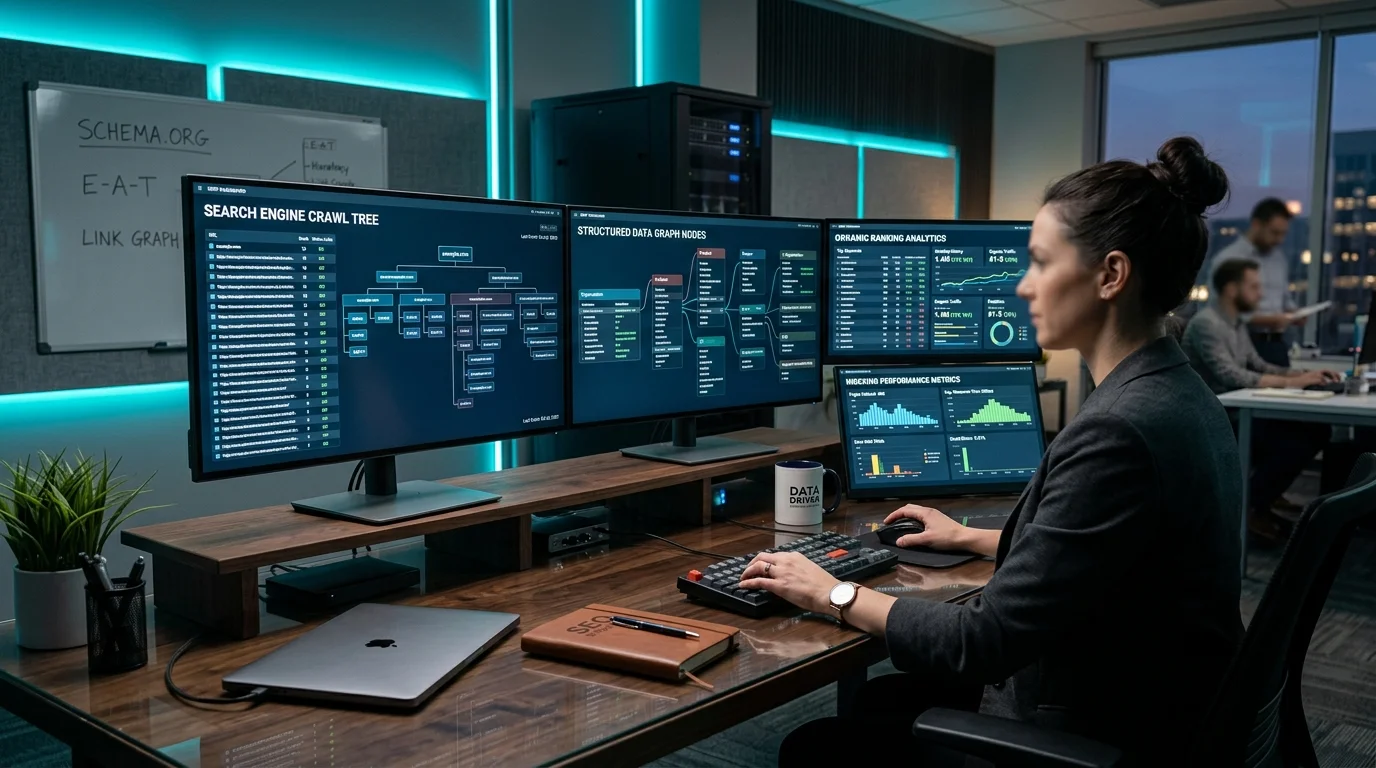
The Comprehensive Technical SEO Checklist for Modern Web Platforms
An actionable engineering guide to crawling, indexing, canonicalization, JSON-LD structured data, and Core Web Vitals for modern web applications.

Integrating AI Agents & Automation into Modern Web Architectures: Beyond Simple Chatbots
How forward-thinking digital platforms integrate autonomous AI agents, semantic vector search, and edge workflows to eliminate manual bottlenecks and create dynamic customer experiences.

Mastering Core Web Vitals: A Deep Dive into INP, LCP, and CLS Optimization
A hands-on engineering blueprint for passing Google's Core Web Vitals assessment with green 100/100 scores across mobile and desktop devices.
Next.js 15 App Router Best Practices & Performance Optimization
Explore key architectural patterns, server components, and performance optimization strategies in Next.js 15 for enterprise web applications.
Custom Web Development vs. Website Builders: An Architectural & Commercial Evaluation
A technical and business analysis comparing custom Next.js architectures with off-the-shelf site builders across performance, SEO crawlability, scalability, and long-term TCO.
Why Slow Websites Sabotage B2B Lead Conversion: Beyond the Bounce Rate
Unpacking the hidden cognitive and psychological friction caused by website latency, and how sub-second responsiveness directly protects marketing spend.
The Comprehensive Technical SEO Checklist for Modern Web Platforms
An actionable engineering guide to crawling, indexing, canonicalization, JSON-LD structured data, and Core Web Vitals for modern web applications.
Integrating AI Agents & Automation into Modern Web Architectures: Beyond Simple Chatbots
How forward-thinking digital platforms integrate autonomous AI agents, semantic vector search, and edge workflows to eliminate manual bottlenecks and create dynamic customer experiences.
Mastering Core Web Vitals: A Deep Dive into INP, LCP, and CLS Optimization
A hands-on engineering blueprint for passing Google's Core Web Vitals assessment with green 100/100 scores across mobile and desktop devices.
Enjoyed this technical teardown?
Subscribe to receive our latest engineering guides, Core Web Vitals optimization blueprints, and digital strategy insights directly to your inbox.